Hotel Room Names: Compare Beds, Space and Suite Labels
Use Grand Hyatt San Francisco's published room descriptions to compare bed configuration, space and similar suite names before booking.
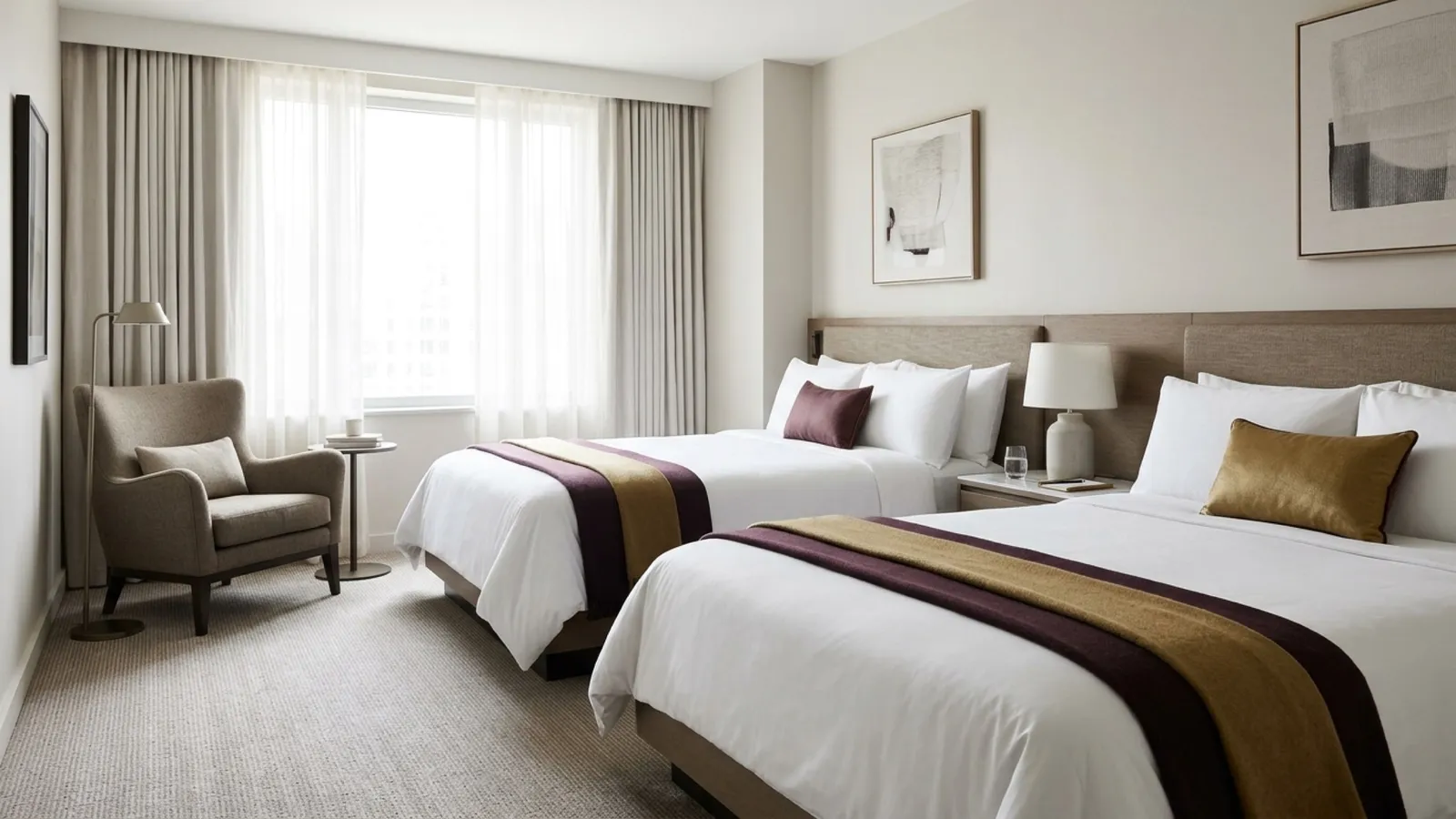
Ana and Jess are two friends sharing a hotel room in San Francisco for a conference. They have one firm requirement: each of them wants her own bed. Neither is willing to share a king, and neither wants to count on a sofa or a rollaway that might not appear.
They’re looking at Grand Hyatt San Francisco. Its room list has a lot of names on it. Choosing by square footage alone could leave them with one king bed instead of two separate beds. (Ana, Jess and their trip are invented for this example. The rooms are real, as the hotel describes them.)
Which Grand Hyatt? This guide compares rooms at Grand Hyatt San Francisco, the Union Square hotel at 345 Stockton Street, San Francisco, CA 94108. Grand Hyatt at SFO is a different hotel at the airport: 55 South McDonnell Road, San Francisco, CA 94128. Check the hotel name and address on your booking page before choosing a room.
What the hotel says about four of its rooms
Here is how the hotel’s official rooms page describes four of its room categories, as of November 2026:
| Room | Beds | Size |
|---|---|---|
| 1 King Bed | 1 king | 312 sq ft |
| 2 Double Beds | 2 doubles | 312 sq ft |
| Executive Suite | 1 king | 590 sq ft |
| Executive Suite City View | 1 king | 590 sq ft |
(Grand Hyatt San Francisco rooms)
The figures and labels are advertised by the hotel; they are not measurements or findings from a stay.
Bigger isn’t the same as more beds
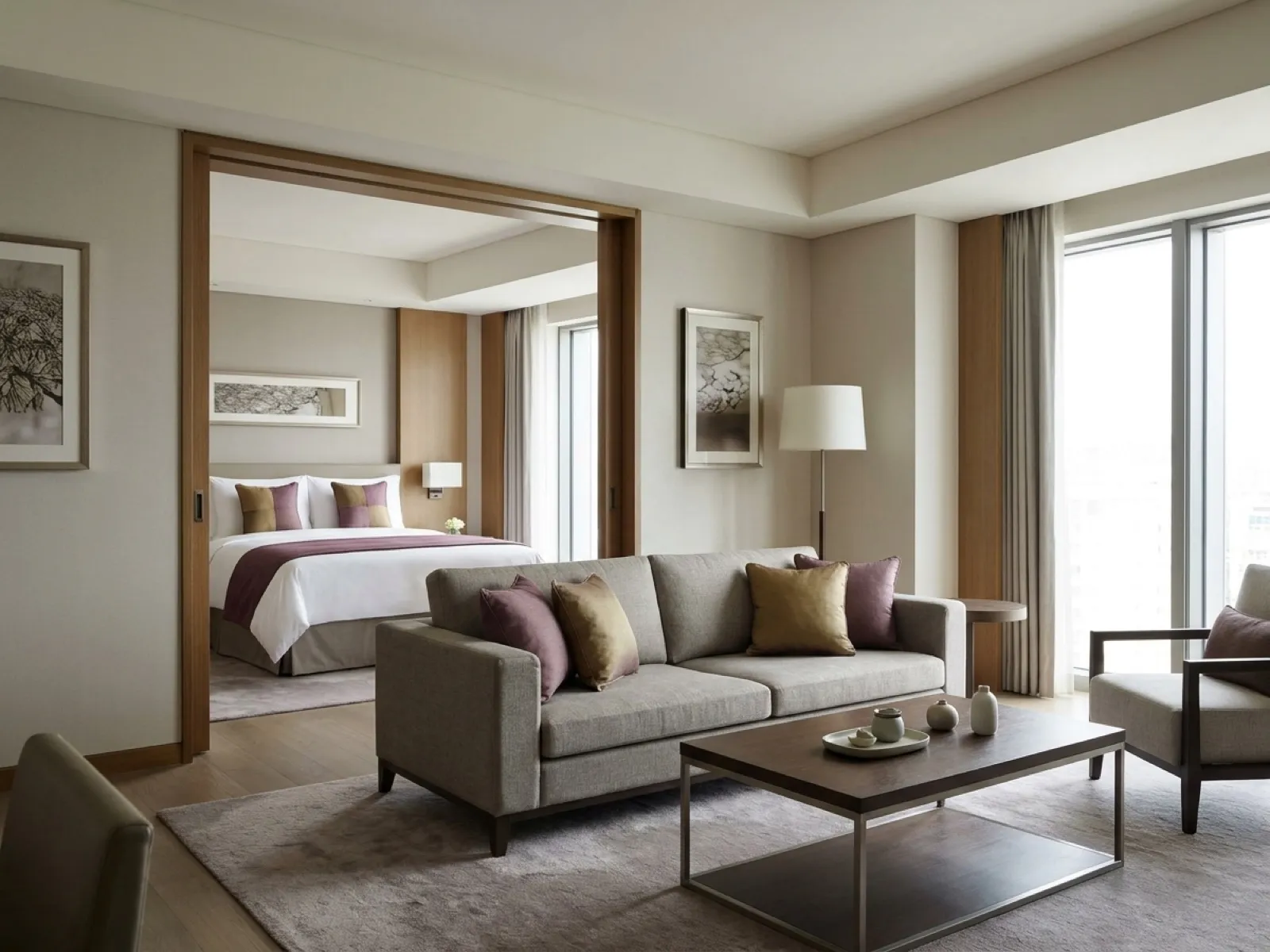
Each of the two suites advertises 590 square feet, almost twice the 312 of the regular rooms. Each also advertises a separate living area. But each advertises one king bed.
For Ana and Jess, that settles it. A larger room with one bed doesn’t meet a two-bed requirement, however much space it has. A separate living area isn’t a second bed either. They have ruled out sofas and rollaways, so those are not substitutes for the two existing beds they want.
Of these four, the room whose description matches their need is 2 Double Beds: two advertised beds in 312 square feet.
Two details in that description are worth reading carefully:
- They’re doubles, not queens. The hotel describes them as double beds. If bed size matters to you, go by the bed type the hotel names rather than assuming a larger one.
- The same size as the king room. The 2 Double Beds and 1 King Bed rooms are both advertised at 312 square feet. Both categories list the same total area. That doesn’t establish how much usable floor space remains around the beds.
Similar names, different labels
Now look at the two suites. “Executive Suite” and “Executive Suite City View” sound like near-twins, and on the page they share the advertised size and bed. But the hotel labels the first a Standard Suite and the second a Premium Suite.
That label can matter if you’re hoping to use a suite upgrade. The hotel’s page refers readers to World of Hyatt’s program terms for upgrade eligibility. Which suites a particular upgrade can be applied to, if any, is a question for those terms and the specific stay, not for the room name. Our guide to how hotels decide who gets a suite upgrade covers the general picture.
Don’t read too much into the words, either way. “City View” in one name doesn’t tell you the other suite has no view. And a “Premium” label on this hotel’s page doesn’t mean every room with a similar name elsewhere is classed the same way. The safe habit is to compare the exact category names, sizes and labels the hotel publishes, rather than guessing from the words.
What the descriptions don’t tell Ana and Jess
The published descriptions help them shortlist a category. Before paying, they still need to settle these booking details:
- Their party size. Search for two adults and confirm that the selected room and rate accept both travelers. Bed count alone is not an occupancy approval.
- Their dates and price. Search the actual stay rather than treating a room’s appearance on this page as an offer of availability.
- The rate terms. Read the payment, cancellation and included-benefit conditions for the rate they are considering.
- Any extra sleeping arrangement. The page lists rollaways on request for both suites and says the Executive Suite can connect to a double-bed room. Neither statement confirms those arrangements for a particular stay, or says a second room is included. Ana and Jess’s example relies on neither.
So their plan is simple. They search their dates, choose the 2 Double Beds category by its exact name, read the room and rate description at checkout to confirm it still says two double beds, and check that the booking accepts two adults. If anything they need isn’t stated, they ask the hotel before paying.
Doing this for any hotel
For another hotel, use the same starting questions:
- Start with the requirement, such as two beds, a bathtub or a separate living area, not the room’s name or size.
- Read the official room descriptions for beds, size and any label the hotel attaches.
- Match the requirement to the exact category name, then book that name.
- Separate advertised features from booking conditions. Confirm party size, requested arrangements and any upgrade eligibility for the specific stay; don’t infer them from the category name.
The bigger, fancier-sounding room may be right for someone else. For these two friends, the useful starting point is the category that advertises two beds, followed by a booking that confirms their needs.
The room descriptions here are from Grand Hyatt San Francisco’s official rooms page as of November 2026. Hotels update rooms and descriptions, so check the current page before you book. This guide isn’t a review of the hotel and doesn’t recommend any room.