A hotel kitchenette: check what you can actually cook
Check the exact room’s equipment and your likely meals before paying more for a kitchenette.

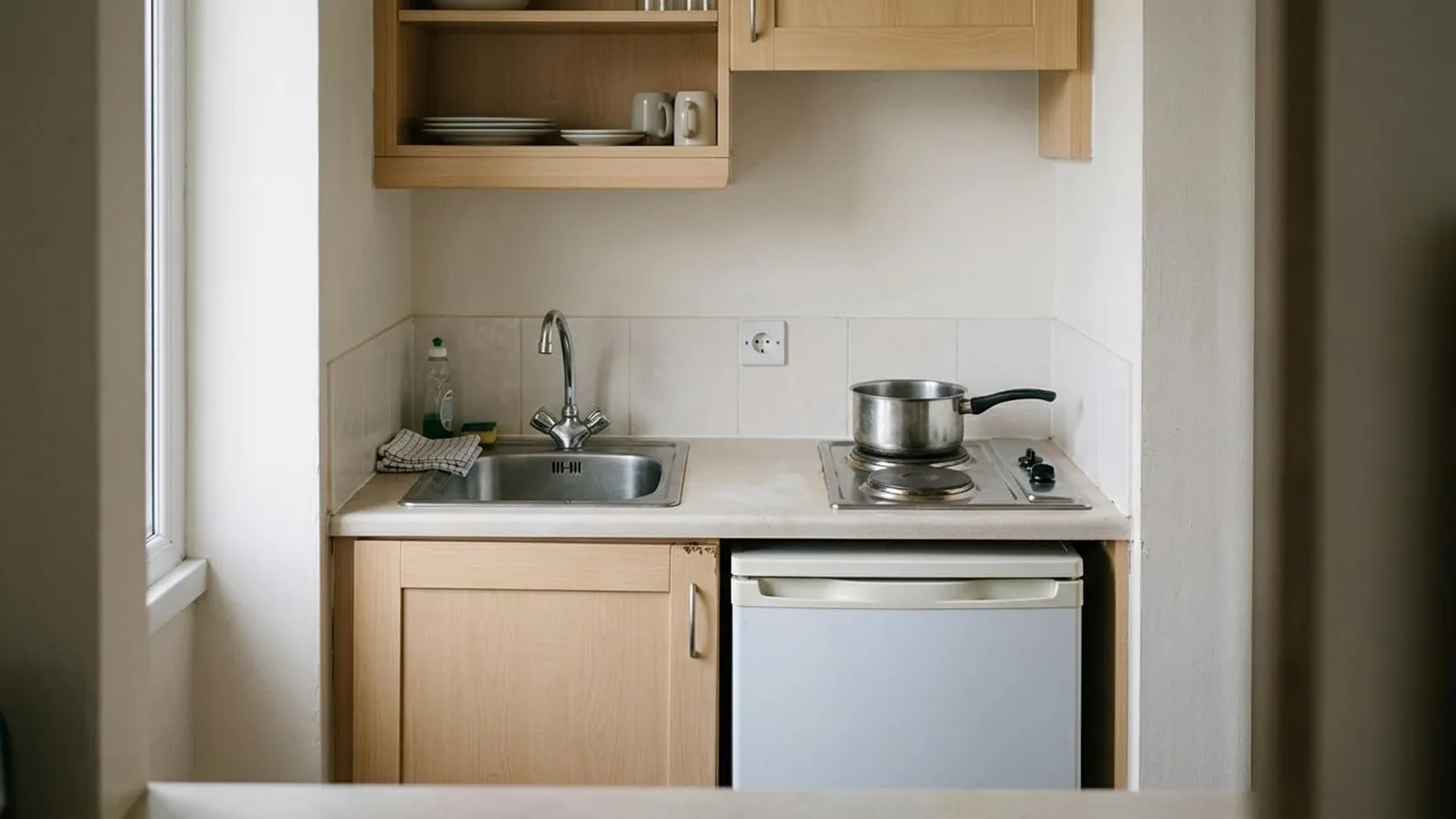
A kitchenette can make a longer stay easier. It can also be a kettle, a small refrigerator and an expectation that you will improvise the rest.
Before paying extra, describe two meals you would actually make. Then check whether the exact room has the equipment, storage and working space those meals require.
Test the room against a meal
For breakfast, you might need a refrigerator, bowls, a knife and somewhere to wash up. For a simple hot dinner, you may also need a cooking surface or suitable microwave, a pan, utensils and basic tableware.
These are examples, not a universal inventory. Your diet and cooking habits determine the useful list. Someone happy with cold breakfasts needs something different from someone planning most meals in the room.
Marriott’s own kitchen explainer notes that amenities vary by brand, property and room type, and that cookware may sometimes need to be requested. Treat even a familiar brand as a starting point for checking the specific room. Marriott’s kitchen information.
Ask about the missing details
Confirm what is in the room, what must be requested and whether a request can be fulfilled for your dates. Ask about refrigerator size, a freezer compartment if essential, cooking appliances and the items needed to use them.
Check what cooking is permitted. Do not assume that bringing an appliance is allowed or that a socket, balcony or shared space is suitable for it. Follow the property’s safety rules.
A photograph can help you form questions, but it cannot establish that every room in the category has the same layout or equipment. Use the exact category and dates in your enquiry.

Compare the premium with a modest meal plan
Take a fictional seven-night stay where the kitchen-equipped room costs $20 more per night: a $140 premium. Suppose your realistic meal plan reduces other spending by $12 a day after groceries and supplies. That is $84 over seven days, leaving $56 of the premium unrecovered in cash.
You might still choose it for convenience or food preferences. The point is to name that benefit rather than claim the kitchen automatically pays for itself. These figures are invented; include local charges and the food you would otherwise buy in your own comparison.
Do not count every restaurant meal as “saved” if you still want to eat out. Nor should a cooking plan turn the holiday into work nobody agreed to do.
Check the surrounding routine
Where will groceries come from? Can you carry them comfortably? Will you be home at the times you imagine cooking? Equipment helps only when the rest of the routine fits.
RESTED’s everyday-meals guide develops that side of a longer stay. HotelHacker’s room-selection guide helps separate a room’s label from what it actually provides.
Choose the kitchenette for meals you want to make and facilities you have checked. Anything more ambitious can wait until you know the place.