How Hotel Chains Work: Parent Companies, Brands and Who Runs the Hotel
A beginner's guide to hotel chains: how a parent company, a brand and an individual hotel differ, why most hotels are franchised or managed, and what a brand name does and doesn't tell you.

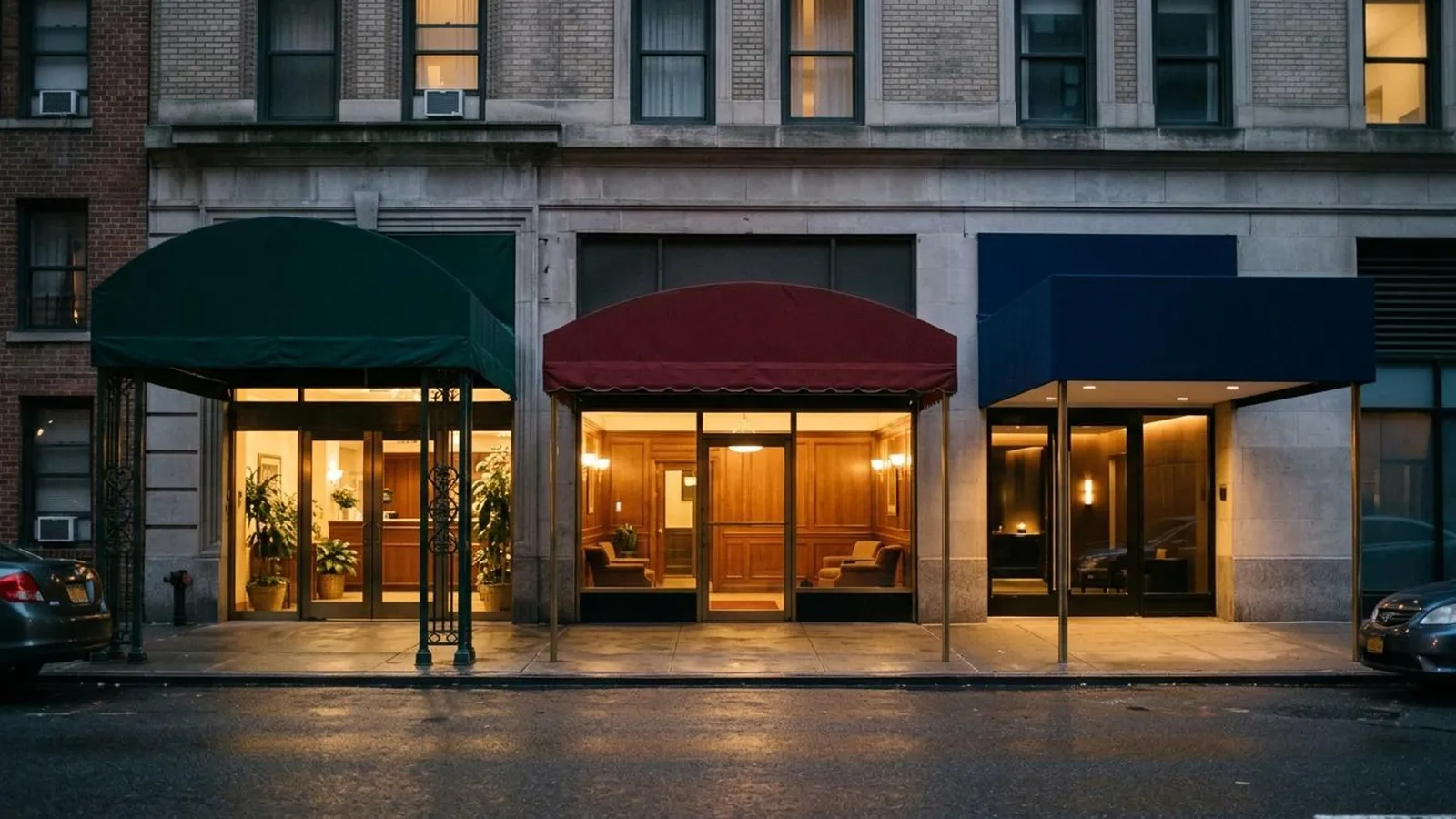
A Courtyard, a Sheraton and a Ritz-Carlton look like three unrelated hotels, yet all belong to Marriott and share one loyalty program. Meanwhile, two hotels with the same name on the sign can feel quite different. Both facts make sense once you know the three layers behind a hotel sign: the parent company, the brand and the individual hotel.
Figures come from the companies’ own brand pages and annual reports, all read on November 15, 2026.
Three layers: company, brand, hotel
The parent company is the business behind the brands. This guide uses four: Marriott, Hilton, Hyatt and IHG. Each runs the booking website, sets the rules for its brands and runs the loyalty program.
The brand is the name on the building, such as Hampton, Holiday Inn Express or Hyatt Place. A brand is a set of rules and a price level. Hilton’s brands page counts 28 hotel brands and IHG’s brands page counts 21.
The individual hotel is the building you sleep in. It usually has its own owner.
Who owns and runs the hotel
The company whose name is on the sign usually doesn’t own the hotel. Marriott’s latest annual report says it owns or leases “less than one percent” of its system (Marriott 2025 Form 10-K, checked November 15, 2026). Three arrangements are common.
Franchised. The hotel’s owner pays the company to use the brand name, the reservation system and the loyalty program, and then runs the hotel itself or hires someone to. Hilton’s annual report says it does not own, manage or operate franchised hotels and does not employ the people who work in them (Hilton 2025 Form 10-K, checked November 15, 2026).
Managed. Someone else still owns the building, but the hotel company runs it day to day under a long-term contract and is paid a fee. IHG describes it this way: it manages the hotel, while a third party owns the building, and the senior managers are typically IHG employees (IHG, how our business works, checked November 15, 2026).
Owned or leased. The hotel company owns or leases the building and runs it. This is the rare case.
The companies’ own figures show the mix. Marriott’s, Hilton’s and Hyatt’s are as of December 31, 2025:
- Marriott: 9,805 properties. Of these, 7,644 were franchised, licensed or similar, 2,017 were run by Marriott (managed, owned or leased), and 144 were residential.
- Hilton: 9,158 properties. Of these, 8,239 were franchised or licensed, 873 were managed, and 46 were in its ownership segment, mostly leased.
- IHG: its business-model page says 73% of the rooms in its system are franchised, 27% managed and under 1% owned and leased. That split counts rooms, not hotels, and the page gives no date for it.
- Hyatt: 1,528 hotels and all-inclusive resorts. Hyatt says it directly employs about 50,000 of the roughly 242,000 people who work across its offices and its managed, franchised, owned and leased properties (Hyatt 2025 Form 10-K, checked November 15, 2026).
So at most chain hotels, the staff work for the hotel’s owner or a management firm, not for the company on the sign. The footer of IHG’s brands page says most of its hotels are independently owned and operated.
Why two hotels of one brand can differ
Two hotels of the same brand may have different owners, operators, budgets and building ages.
The brand ties them together through its standards. Hyatt’s annual report says franchisees must operate their hotels in line with its brand standards, and that Hyatt approves the plans and location of franchised hotels and reviews how they are run. But the same report lists, as a business risk, owners or franchisees failing to keep up those standards. A standard is a requirement placed on the owner, not a guarantee to you about a specific room.
Brand tiers, with examples
Each company sorts its brands into price and service levels. The labels differ by company. The groupings below follow the companies’ own pages; the four level names are ours.
Luxury.
- Marriott lists The Ritz-Carlton, St. Regis and JW Marriott under “Luxury” (Marriott brands page).
- Hilton lists Waldorf Astoria and Conrad under “Luxurious getaways.”
- IHG’s luxury collection includes InterContinental, Kimpton and Six Senses.
- Hyatt’s annual report lists Park Hyatt and Alila under “Luxury.”
Full service. Larger hotels, usually with a restaurant and meeting rooms.
- Marriott’s “Premium” group includes Marriott Hotels, Sheraton and Westin.
- Hilton’s “Premium experiences” group is Hilton Hotels & Resorts and DoubleTree.
- Hyatt’s “Classics” group includes Grand Hyatt and Hyatt Regency.
Select service. Simpler hotels with fewer facilities.
- Marriott’s “Select” group includes Courtyard, Fairfield and SpringHill Suites.
- Hilton’s “Elevated essentials” group includes Hilton Garden Inn, Hampton and Tru.
- IHG describes Holiday Inn Express, Garner and avid as budget-conscious brands.
- Hyatt’s “Essentials” group includes Hyatt Place.
Extended stay. Rooms with kitchens, built for longer visits.
- Marriott’s “Longer Stays” group includes Residence Inn, TownePlace Suites and Element.
- Hilton’s “Spacious suites” group includes Homewood Suites and Home2 Suites.
- IHG names Staybridge Suites and Candlewood Suites as its extended-stay brands.
- Hyatt’s “Essentials” group includes Hyatt House and Hyatt Studios.
Some companies also have “collection” brands, such as Marriott’s Autograph Collection and Hilton’s Curio Collection: groups of individual hotels that keep their own names, so they vary more by design.
Hyatt’s examples come from its annual report because Hyatt’s website couldn’t be read on the day we checked. Confirm the current list on Hyatt’s site.
One loyalty program per company
Each parent company has a single loyalty program that covers its brands:
- Marriott: Marriott Bonvoy
- Hilton: Hilton Honors
- Hyatt: World of Hyatt
- IHG: IHG One Rewards
This is why the parent company matters: one account earns and spends points across its brands. There are exceptions. IHG’s brands page says some Six Senses hotels don’t take part in IHG One Rewards and that not all Iberostar Beachfront Resorts do.
What a brand does and doesn’t tell you
A brand name is a good guide to:
- The price level and style of hotel, such as luxury, full service or extended stay.
- A few signature features the brand advertises. Hilton’s brands page describes Hampton as offering free hot breakfast, and Embassy Suites as two-room suites with free cooked-to-order breakfast. Even then, check the hotel: IHG’s brands page says free breakfast can vary by property.
- Which loyalty program applies.
A brand name does not tell you:
- How big the room is, or what a room name means at that hotel.
- When the hotel was last renovated.
- Whether it has a pool, a lounge or parking, and what they cost.
- Whether it adds a resort or destination fee.
How to check an individual hotel
- Read the hotel’s own page on the company’s website, not just the brand description.
- Compare room types by their details, not their names. See how to compare hotel room names.
- Check the facility you care about. We have guides to checking a hotel lounge and checking a kitchenette.
- Look at the full price, including any resort or destination fee.
- Ask the hotel directly if something matters enough to decide the booking.
Where to go next
To decide whether to stick with one company, start with the main hotel programs compared. Then read the guide for the program you’re leaning toward: Marriott Bonvoy, Hilton Honors, World of Hyatt or IHG One Rewards.
Common questions
Why are there so many hotel brands? Each brand targets a price level and a type of trip. And because most hotels are owned by someone else, more brands give owners more to choose from. That second point is our reading, not a company statement.
Does the brand tell me what I’ll get? It tells you the price level, the style and the loyalty program, but not the room size, the building’s age or which facilities are open. Check the individual hotel.
Does one loyalty account cover all of a company’s brands? Generally yes, with a few exceptions. Check the program’s terms.
Sources checked November 15, 2026: Marriott brands page, Hilton brands page, IHG brands page, IHG, how our business works, and the 2025 Form 10-K annual reports of Marriott, Hilton and Hyatt, all with figures as of December 31, 2025. Hyatt’s website could not be read on that date. Brand lists and counts change as companies add and drop brands, so check the companies’ own pages for the current picture.
This guide is general information, not a guarantee of what any hotel offers.